Awards
May 27, 2025
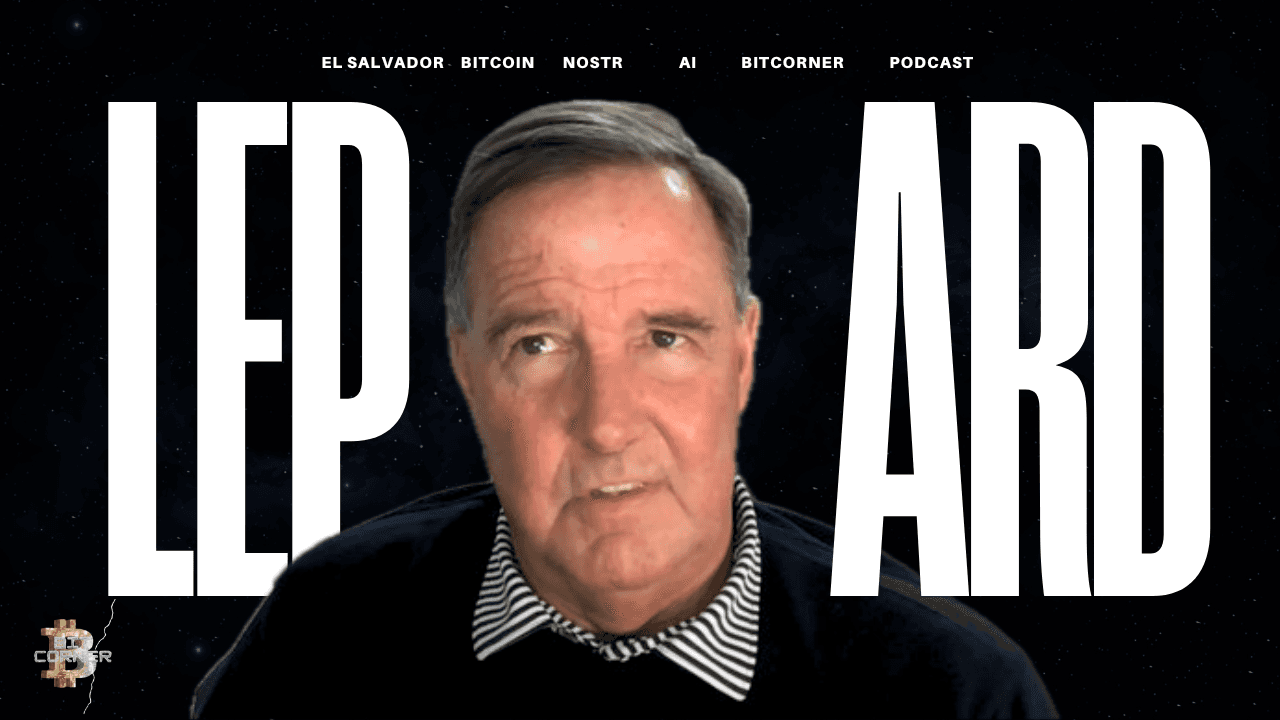
The episode opens with a stark thesis: the crises are getting bigger, and the next one will be bigger still. The guest frames recent history as two “big prints” of money—2008 and 2020—with the uncomfortable conclusion that more are likely. The reason, he argues, is simple compounding math: if debt grows faster than the economy, policymakers eventually face a binary choice—depression or money printing—and they reliably choose inflation over collapse.
A Short History of “Broken Money”
The conversation’s historical arc centers on 1971, when Nixon severed the dollar’s link to gold. Before then, the United States experienced episodes of wartime inflation, but—outside of wars—runaway inflation didn’t define the system. Post-1971, inflation becomes a structural feature, nudged and negotiated by central banks. Volcker’s early-1980s tightening reasserted discipline for a time. Later tailwinds—globalization and a China labor shock; waves of technology-driven efficiency—helped dampen price pressures. Yet the deeper trend from 1971 onward remains upward: debt, asset prices, and a recurring need to “stabilize” through increasingly aggressive monetary interventions.
From Dotcom to Housing to “Everything”
The episode places successive bubbles on a timeline tied to the “price of money.” After the dotcom bust, near-zero rates stoked housing. After the Global Financial Crisis, zero-interest-rate policy and quantitative easing made funding almost free, and capital flowed into “everything”—stocks, bonds, real estate. Asset prices, the guest contends, were no longer “real”; they were artifacts of artificially low money costs. Attempts to normalize policy in 2015 stalled by 2019. Then COVID forced rates back to zero and a fresh wave of printing.
Why Inflation Is Treated as “Normal”
An extended passage challenges the mainstream (Keynesian) framing that modest inflation is desirable. In the guest’s view, this narrative endures because it serves the interests of government, central banks, and sophisticated financial actors who can borrow cheaply and invest in higher-yielding assets. Ordinary people feel the result at the supermarket. He contrasts Keynesian policy—government steering demand, smoothing cycles, and tolerating inflation—with the Austrian school, which emphasizes market-set interest rates, monetary discipline, and the belief that repeated “smoothing” causes the very booms and busts policymakers then fight.
Signals: Gold’s Surge, Bitcoin’s Breakout, and a Slipping Dollar
The episode returns repeatedly to market signals. Gold’s price surge is interpreted as a broad, nonverbal vote of no confidence in fiat. Bitcoin’s new highs are taken as a parallel signal from a digital, programmatic form of “sound” money. Even the dollar’s relative weakening against other fiat currencies is cast as erosion of trust at the margins. In the guest’s framework, trust is the root of currency: when trust is high, people hold cash and buy long bonds; when trust erodes, they rotate into things the government cannot print—gold, silver, Bitcoin, and, selectively, real assets.
The Fiscal Doom Loop
The most technocratic section outlines a feedback loop:
A larger deficit requires more bond issuance.
If buyers resist (on fear of future printing), yields rise.
Higher yields raise government interest expense.
Higher interest expense widens the deficit.
The loop intensifies until the central bank prints again to break it.
That loop, the guest argues, is how emerging-market debt crises unfold—and he warns the telltale constellation (falling stocks, falling bonds, weakening currency) can appear in advanced economies, too, once deficits dominate.
“Costco Gold” and Popular Awakening
The episode offers a striking retail anecdote: gold bars flying off shelves as shipments arrive. It’s presented as evidence that regular people are slowly waking to monetary fragility, gravitating toward assets with supply constraints. The guest emphasizes that “sound money” communities long flagged these issues, but the pain of post-2020 price rises has broadened awareness.
Trade, Tariffs, and the China Question
Pivoting to geopolitics, the discussion frames China’s export surge and price discipline as hollowing out U.S. manufacturing and embedding chronic trade deficits—the “curse” of a world reserve currency in the Triffin dilemma. The episode casts the Trump-era tariff push as an attempt—however blunt—to “break the glass” and force renegotiation of a system perceived as imbalanced. When markets wobble, policymakers back off; then the structural pressures reassert themselves. In the guest’s view, this cycle ultimately feeds back into the monetary loop, hastening the next “big print.”
Key Takeaways
Inflation is not an accident; it is the recurring policy choice made to avoid systemic collapse when debt outruns growth.
The severing of gold in 1971 marks a regime shift toward structurally inflationary fiat finance and repeated use of monetary tools to stabilize.
Bubbles follow the price of money; when the cost of capital is forced down, “everything” can inflate together.
As trust in fiat ebbs, capital rotates toward scarce assets: gold and Bitcoin are two loud signals.
The U.S. fiscal position risks a deficit–interest expense feedback loop that advanced economies usually avoid—until they don’t.
Geopolitical trade tensions interact with monetary fragility, making policy mistakes costlier and market reactions sharper.
The guest expects a currency-system transition by the early 2030s, with bumpy years ahead.
Why Bitcoin Features in a “Sound Money” Future
Bitcoin’s appeal in this narrative is mechanical scarcity: a fixed issuance schedule, an open ledger, a protocol that resists discretionary supply expansion. Whether one prefers gold’s physical scarcity or Bitcoin’s algorithmic scarcity, both share the property that governments cannot conjure them at will. In an era of repeat “prints,” assets like gold, silver, and Bitcoin are presented as hedges against the political convenience of inflation.
The Human Bottom Line
The episode never loses sight of the lived consequences: rising grocery bills, eroded purchasing power, widening wealth concentration as those closest to cheap capital build assets faster than wages can catch up. Whatever one’s school of economics, the costs are concrete. If the path ahead is, as the guest suggests, “bumpy,” the practical question becomes positioning—financially, politically, and culturally—for a world where trust in money must be rebuilt on constraints that are harder to bend.