Awards
Sep 26, 2025
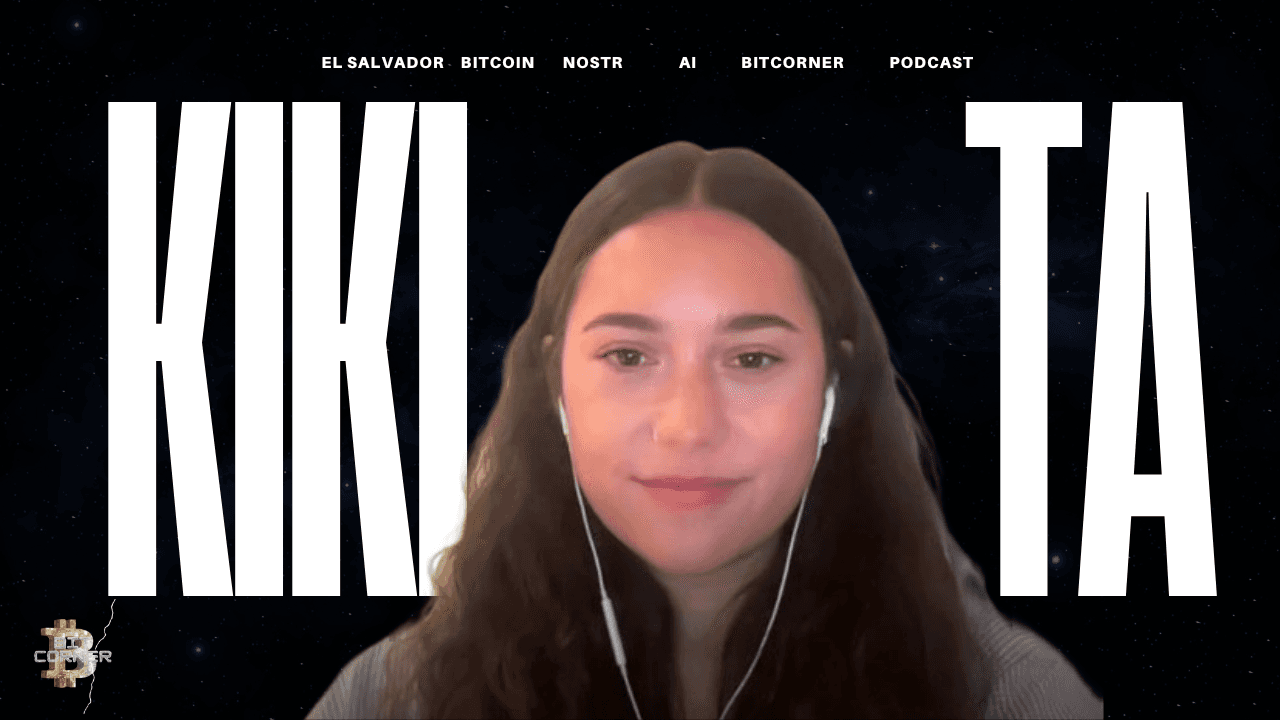
Season finale energy meets ground truth in this episode of the BitCorner Podcast, where host Juan Cienfuegos sits down with Kiki—organizer of Adopting Bitcoin and board member of My First Bitcoin—to examine what Bitcoin adoption really looks like beyond headlines and hype. The conversation traces Kiki’s path from hospitality to Bitcoin, explores bottom‑up growth in El Salvador, and previews how Adopting Bitcoin 2025 aims to catalyze circular economies and practical education across Spanish‑speaking communities and beyond.
From Hospitality to Bitcoin: A Pandemic‑Era Pivot
Kiki’s story starts in restaurants and events in the Toronto area, where lockdowns in 2020 forced a hard pause and opened time to learn—not just Bitcoin, but money and financial literacy from first principles. Skeptical at first, she took the slow path: studying finance basics, reading books, and doing general courses before “committing” to Bitcoin. That deliberate foundation paid off. Traveling through Mexico, she sought community, then found it in El Salvador—where a first Lightning transaction felt scary, consequential, and ultimately empowering. Over time she shifted to a near‑Bitcoin standard, joined the Adopting Bitcoin organizing team, and moved her own work toward supporting education and real‑world adoption.
Bottom‑Up, Not Top‑Down: What’s Really Happening in El Salvador
A recurring theme is the mismatch between “Twitter Bitcoin” and real life. On the ground, El Salvador’s adoption is best described as bottom‑up: street vendors stacking sats, independent merchants testing what works, local educators building capacity, and devs shipping. It’s not frictionless—signs may say “Bitcoin accepted” and then fail on a given day—but the base layer is present and maturing. Kiki underscores that adoption is wider than the beaches and capital: activity stretches across towns and departments, with circular economies forming where committed organizers, merchants, and consumers align incentives.
One pivotal shift: the Chivo wallet’s role has receded. That’s not a setback so much as a return to Bitcoin’s strengths—permissionless, diverse tooling, and choice. As top‑down scaffolding lightens, grassroots builders breathe and iterate. The important signal is continuity: growth persists regardless of political cycles or external narratives.
Education Before Adoption: Building a Base Layer of Literacy
If there’s a single refrain in the episode, it’s that education precedes adoption. Kiki argues you can’t introduce new money without giving people a foundation in basic financial literacy—budgeting, saving, opportunity cost, time preference, and risk. That’s as true in Canada as in El Salvador. Communities that start with “money 101” move faster and make better decisions when they meet Bitcoin, and educators report this sequence (literacy first, Bitcoin second) makes training stick.
This lens also clarifies a persistent tension in adoption: regulation versus permissionlessness. Regulatory context matters for businesses and institutions, and conference panels will engage it. But individual empowerment through self‑custody, Lightning, and peer‑to‑peer trade does not wait for a decree. Both tracks operate in parallel, with institutions setting broader conditions while communities bootstrap functionality from the edges.
Adopting Bitcoin 2025: From Devs to Plebs, Spanish‑First, Builder‑Led
The conference is positioned as a practical arena for adoption—not a generic expo. Programming highlights include:
Two main stages and a dedicated Spanish track; Spanish content is treated as core, not ancillary.
Hands‑on workshops and a hacker lounge where devs can show, test, and teach.
A creator stage to amplify Spanish‑speaking voices and local educators previously under‑represented.
A Lightning poker journey, a VIP lounge, and a “Bitcoin World Fair” to showcase products and services tied to real use cases and circular economies.
“Programming for Bitcoin” aimed at youth and newcomers, bridging education and building.
The curation reflects the ethos: Bitcoin‑only, focused on adoption worldwide. Submissions are assessed for relevance to practical use—how a product, service, or curriculum accelerates real‑world uptake, what frictions it overcomes, and what lessons it offers other regions. Expect sessions on circular economies, nuts‑and‑bolts compliance where appropriate, and deeply technical content for devs alongside accessible workshops for plebs.
Global Threads: Shared Challenges, Local Solutions
The adoption stories converging in San Salvador come from Africa, Europe, Asia, and Latin America. Despite differences in regulation or infrastructure, communities report common obstacles:
Financial literacy gaps: people need baseline education before they can responsibly use new money.
Tooling reliability: workflows break if wallets or integrations fail in the moment.
Merchant experience: incentives, fee management, and training determine whether “Bitcoin accepted here” is true at point of sale.
Institutional context: policy can help or hinder, but bottom‑up networks tend to persist regardless.
What travels well is the playbook: start with education; find early merchant cohorts; secure reliable tooling and clear operational processes; make Spanish (or the local language) a first‑class citizen; and maintain spaces for devs and plebs to interact without gatekeeping.
Psychology Matters: “Number Go Up” and the First Transaction Moment
The episode treats “number go up” not as a dirty secret but a psychological on‑ramp. Price awareness draws interest; real utility keeps people engaged. The spark often arrives with a first Lightning payment: click, settle, smile. That visceral moment produces confidence and curiosity, converting spectators into participants. Conferences that create many such moments—workshops, live demos, merchant tours—accelerate adoption more than slogans ever could.
Reality Check: Imperfect, Persistent, and Pointing Forward
No one claims perfection. Services glitch; signs mislead; policy winds shift. But the growth trend is unmistakable. El Salvador continues to build: educators teach, merchants learn, devs ship, and communities experiment. When top‑down scaffolding falls away, the permissionless base remains—and often thrives. That’s the point: Bitcoin does not need politics to function, but it benefits when institutions and builders can talk, coordinate, and reduce friction.
This season finale frames Adopting Bitcoin not as a showcase but as a workshop for a movement that is practical, bilingual, and global. Education comes before adoption, Spanish is central, devs and plebs share rooms, and circular economies are the north star. The cliffhanger for Season 5 is less about a single announcement and more about momentum: communities are ready to go live, submit talks, and show what’s working—on stage and in the streets.