Awards
Sep 17, 2025
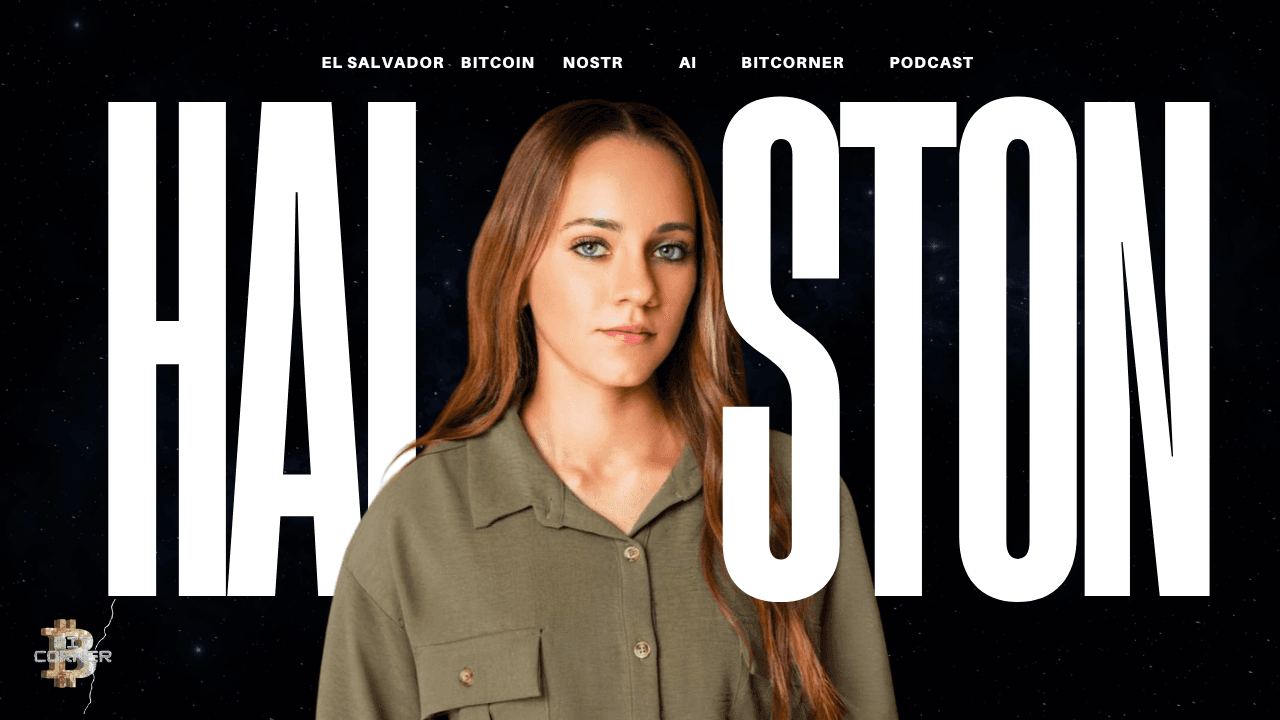
In this frank and wide‑ranging Bitcorner Podcast episode, host Juan Cienfuegos sits down with 23‑year‑old Bitcoiner Halston Valencia to unpack how debt, inflation, and eroding trust in institutions are shaping Gen Z’s financial worldview—and why many in her cohort see Bitcoin as a practical lifeboat rather than a speculative fad.
Halston’s path into Bitcoin began with a shock of recognition. As a business economics student, she absorbed a polished narrative about the Federal Reserve, 2–3% “healthy” inflation, and modern policy orthodoxy. Yet the lived reality—skyrocketing rent, negative real wages, and student loans—clashed with the textbook. Reading Lyn Alden’s Broken Money supplied the missing context, reframing money’s history and the consequences of leaving the gold standard. On a second pass through the book, she stopped focusing solely on what’s broken and started seeing Bitcoin as a concrete solution: scarce by design, decentralized by architecture, controllable at the individual level through self‑custody, and structured to preserve purchasing power over long horizons.
Self‑custody emerges as the non‑negotiable principle. The mantra “not your keys, not your Bitcoin” isn’t ideological posturing; it’s the mechanism by which individuals reclaim monetary sovereignty. In practice, this means cold storage and a willingness to assume responsibility for key management—trading convenience for control. Halston is unequivocal: holding on an exchange or relying on “paper Bitcoin” constructs dilutes the point of owning an asset that was invented to remove counterparty risk.
The macro reality behind Gen Z’s skepticism
Millennial and Gen Z financial arcs rhyme but differ in intensity. Millennials navigated the 2008 crash and the COVID shock; Gen Z is entering adulthood amid rent inflation, higher debt loads, and wages that don’t keep pace. The old playbook—save cash, buy a house, dollar‑cost average into stock index funds—now collides with asset prices inflated by decades of artificially low rates and credit expansion. For many, real estate is no longer a reliable inflation hedge; it is simply unaffordable. Equities, similarly, can be whipsawed by a handful of words from central bank leadership. Bonds offer negative real yields once inflation is accounted for. In that context, Bitcoin’s fixed supply and programmatic issuance stand apart.
Institutional signals and the “paper Bitcoin” worry
Halston treats corporate treasury allocations and institutional adoption as useful signals—they separate Bitcoin from the altcoin froth and nudge mainstream curiosity. But she draws a hard line between signal and substance. Without bona fide self‑custody, exposure becomes an IOU layered atop intermediaries, re‑creating the fragilities Bitcoin was built to remove. Her prescription is consistent: buy Bitcoin, hold your own keys, and use the ecosystem’s tools (wallets, hardware, best‑practice operational habits) to keep custody simple and safe.
Education: add pluralism, teach incentives
A thread running through the conversation is the absence of Austrian economics and monetary pluralism in mainstream curricula. Halston argues universities often teach one monetary ideology as settled truth, discouraging critical inquiry into incentives. Her redesign would offer an Austrian track as an option, reward students for questioning orthodoxies, and treat economic history not as dogma but as a map of trade‑offs. In her view, Bitcoin’s greatest teaching is to follow incentives—who gains, who bears risk, and what is assumed to be “good” for the economy.
Women in Bitcoin: opportunity through openness
Halston contrasts male‑dominated lanes in traditional finance with the breadth of roles in Bitcoin—media, education, marketing, research, product, policy—where competence and conviction matter more than gatekeeping. She works independently with Adam O’Brien across Bitcoin Well, Get Based, and a new weekly show, blending macro research with production. That variety, she notes, is both energizing and formative: producing content becomes a vehicle to keep learning, sharpening ideas in public.
Culture and community
There’s levity too. Asked which Bitcoiner she’d vacation with, Halston picks Isa Santos and BTC Isla—a nod to grassroots efforts that make Bitcoin visible in everyday life. The point beneath the fun is serious: durable adoption happens when local communities turn theory into practice, from cafés to peer‑to‑peer exchanges, with self‑custody as the norm.
A message to twenty‑year‑olds
Halston’s closing counsel is deceptively simple: stay intensely curious. Curiosity drives continuous learning, exposes incentives, and inoculates against passive acceptance of one‑size‑fits‑all advice. For Gen Z treading water under negative real rates and rising costs, that mindset—paired with self‑custody and long‑term thinking—offers a path to sovereignty rather than resignation.
What this episode makes clear is not that Bitcoin is a magic wand, but that it is a tool uniquely aligned with the constraints young people face today. Fixed supply in a world of elastic promises; censorship‑resistant settlement in a world of intermediated access; and user‑controlled custody in a world that nudges dependence. For a generation taught to be compliant employees in a cubicle economy, the episode argues, the more urgent lesson is to become competent stewards of their own money.